
Five years ago, journalist Marianne Landzettel came to Deepdale Farm and wrote a profile of our experiences of converting to organic for the Organic Research Centre. There are good reasons why it’s called ‘Going cold turkey through a perfect storm‘.
It feels like a very long time ago now. I left the farm at the end of 2022 after a baptism of fire when sometimes, it felt like everything that could go wrong, did. In retrospect, it was one of the most valuable learning experiences of my life, and we achieved a huge amount in a very short time, pivoting the farm rapidly to a new way of doing things after years of extractive management. It taught me a huge amount, and set me on a new path.
But it was often a difficult and frustrating experience, and I learned about so many of the barriers that stand in the way of trying to change the direction of a farm – the same barriers, in many ways, that stand in the way of changing the direction of our food system.
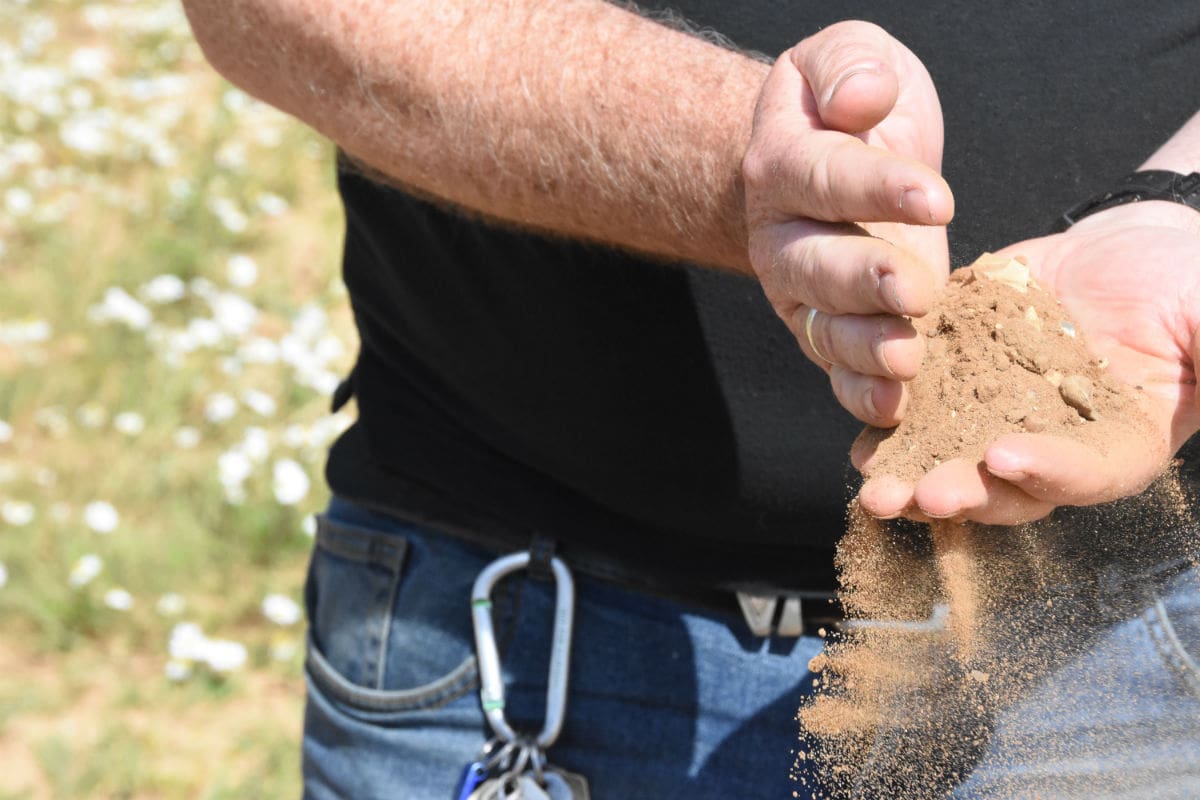
The soils were farmed out, chemically dependent. Organic growing couldn’t hit its stride until investments had been made in restoring soil health, with an organic conversion period of two years on paper, but in reality, many more needed. The arable area was reduced with more space for nature; the project wasn’t viable without a Countryside Stewardship agreement to keep the lights on. The equipment the farm had invested in over the years was set up for bulk commodity grain production, not small-scale diverse cropping. Kit was sold, almost too much – we nearly sold the plough, which would have been a mistake. When we finally got our first harvest of in-conversion organic wheat in, I saw that it was in some ways easier to process and sell 1500 tonnes of wheat than it was to do the same with 20 tonnes.
I bumped into the farm’s agronomist at the local watermill when I took some sacks of wheat for milling, to sell it in the shop on the farm. He asked me what I was doing there. I said I was getting our wheat milled. “But that’s feed wheat,” he said. It was wheat, clean, perfectly good to eat, but he thought it was only good for livestock.
The system, from the farm’s infrastructure, to business relationships, to the attitude of the agronomist, to how we could sell wheat, was calcified.
Some proponents of agroecological or regenerative farming suggest that the most important shift when changing farming systems is the farmer’s shift in mindset. That may be true, but the practical barriers are still significant, leaving you feeling in limbo in a system not built to support you if you do make a change. Adopting a regenerative approach may take time, leaving a business exposed, even as it still needs to stay afloat.
I recently worked on a project to develop heritage wheat growing in the Tamar Valley for Tamar Grow Local, and encountered a range of obstacles from wrong-sized or inaccessible infrastructure. And it isn’t just wheat. Small-scale producers have to travel further to find small abattoirs that will slaughter just a few bullocks at a time, find a local food hub to sell their vegetables or another way to market them, or become very good at marketing and web design to sell their product online.
The media likes to credit James Dyson for his innovative farming practices and gets excited about AI innovations in farming, precision agriculture, and the rest. That’s all very well, but it pales next to the innovation shown every day by small-scale producers simply trying to stay afloat.
I’ve been working on a project recently to identify the gaps in infrastructure needed to achieve a relatively modest increase in the consumption of local food in a patch of South-East Cornwall. There’s a debate to be had about what constitutes ‘local’ and how much emphasis we should place on it in a pluralistic food system (that debate is for another post), but it is a system likely to be driven by and benefitting small-scale agroecological producers – as well as the communities they live in. The infrastructure needed is physical – refrigerated and ambient storage, greenhouses, flour mills, feed mills, abattoirs, last-mile logistics, kitchens. But it’s also intangible – education, land access, trust, relationships, support, marketing. The industrial food system has done one thing (of many) exceptionally well, which is to build, buy and optimise the connected infrastructure it needs to suit its own ends – but scaled to, and set up for, just that system. So agroecological food production probably needs to build the infrastructure it needs itself, connect with others and share resources, or find ways to use the same infrastructure and tricks as the industrial system.
I think all three approaches are needed.
I always look to ecology for analogies, and I keep coming back to woodland. Healthy woodland is structurally diverse, with layers of different species, herbs, shrubs and trees forming a canopy, but without the trees shading everything out. Mature specimens exist alongside younger trees; light reaches the woodland floor; flowers thrive. Everything is connected underground by fungal mycelia, enabling the exchange of nutrients and information. Natural losses create space for succession as new trees grow up to find the light. The forest garden works to these principles – a food-producing system designed to emulate natural woodland ecosystems.
The industrial food system is more like a plantation: a monoculture, lacking diversity, where rows of identical trees shade everything else out and the species beneath grow weakly, competing for meagre resources.
But a plantation is a choice, not an inevitability. Woodland is not static – given the chance, it finds its way back to complexity. There is space for diversity, for plants on the woodland floor to use the trees as climbing frames, for succession to do its work. What we need is a different emphasis: not scale at the expense of everything else, but gaps in the canopy that let the light through. We still need big trees. We just need to stop letting them take all the sky.
Other stuff
- A good interview with Andy Cato, one half of Groove Armada who developed the Wildfarmed approach for cereal growing. He touches on engaging systemically and is using the industrial system, getting regeneratively-grown wheat onto supermarket shelves. Other approaches are available and what Wildfarmed does isn’t going to work for all producers – it’s all about context.
- I’ve used the terms organic, agroecological and regenerative somewhat interchangeably in this and hold my hand up that the meaning is slightly different depending on the context and no one approach (OK maybe apart from agroecology) has all the answers. I discussed that confusion over terminology before.
- I’m going to Groundswell this 1-2 July and would love to argue how this all works with you over a pint. My Masters dissertation is examining binaries and plurality in food systems, and I’m a sponge for ideas and thought here.


