
New documentary Groundswell is out soon on Amazon Prime, narrated by Woody Harrelson and Demi Moore. According to IMDB, “across five continents, the film encounters farmers, scientists, and Indigenous leaders reshaping humanity’s relationship to land.”
I should be excited, maybe, but the trailer left me cold. Whether it was Demi Moore solemnly declaring “our mother has a fever,” or Woody Harrelson reducing all agriculture worldwide to two types, industrial and regenerative, is hard to say. Or maybe it was the MGM logo at the start, that MGM that’s owned by Amazon, the Amazon that has lobbied against environmental protections, aggressively avoided taxes, violated worker’s rights, busted unions and damaged small businesses. Then there’s Jeff Bezos, who is funding industrial precision fermentation and blowing up rockets in his spare time.
It all leaves a bad taste, but maybe some cognitive dissonance is a price worth paying to get the word out. Michael Pollan said something along the lines of the industrialisation of organic being the price we paid for its success. I’d rather be pragmatic than purist. In 2014, Marc Edelman et al asked questions of the food sovereignty movement including the degree of tolerance within that movement for operating in a pluralistic food system, suggesting that it would need some soul-searching. That paper stuck with me through my Master’s and has led me to examine pluralism in food systems for the dissertation that I really should be working on at the moment, rather than writing this.
Maybe Groundswell isn’t talking to me. It’s the third film in a trilogy, preceded by Kiss the Ground and Common Ground, and I wasn’t drawn to those either, finding their tone cloying. But to give it the benefit of the doubt, Groundswell might do for a wider audience what regenerative agriculture has done for farming: open a door to deeper understanding. Regenerative means nothing without elaboration, is open to selective interpretation, and is vulnerable to greenwashing. But it is an open term, and may have given many farmers an on-ramp that felt easier to approach than organic’s more prescriptive model, starting a journey towards more sustainable and profitable practices (and if reality TV in the 21st century has taught us anything, it’s that we love a journey). Regenerative has caught the zeitgeist; it stands to reason that consumers should be brought along too. I’ve watched little of Clarkson’s Farm, but non-farming viewers have told me it gave them a sense of the pressures farming is under and introduced them to basic concepts of regenerative agriculture (that doesn’t mean I’m going to start watching it).
All this made me think about the conversations and writing on farming and food that come from my own direct experience, chats in farmyards and at agricultural shows, academic journals, films, radio programmes, books, polemics, podcasts and interviews. How I responded was shaped by how I felt about the speaker, how what I heard resonated with me, what I already knew and how confident I was in it, and what happened when I put an idea into practice. What I heard, saw, or read was itself shaped by the experiences, motivations, and knowledge of others. All of this surfaces, in some way, in how I think and communicate about farming and food.
I thought about some questions to frame all this: What’s the situation? Who is speaking? Who are they speaking to? Why are they speaking the way they are? What do they want to achieve?
I found Lloyd Bitzer’s 1968 article describing the rhetorical situation, a “complex of persons, events, objects, and relations presenting an actual or potential exigence which can be completely or partially removed if discourse, introduced into the situation, can so constrain human decision or action as to bring about the significant modification of the exigence.”
Or: a situation needs to be addressed, and the right communication could motivate people to address it.
But it overstates things to expect a single communication to motivate people or systems to change. The rhetorical situation sits within a broader network of meaning, what Jenny Edbauer called a rhetorical ecology: ideas and words from multiple sources circulate and interact, shaping each other across time, changing social relations, geography, technology, culture, individual and collective identity, and history. The way we think and act is an accumulation of everything we have experienced, sought out, or been told, shaped by context and always in flux. Some of us influence that thinking; some of us are drawn toward particular ideas. Coalescing points can be appropriated by interests that don’t align with ours, and there is no guarantee that any two people will take the same meaning from the same message, depending on where each of us is located in the ecology. The rhetorical ecology of farming and food varies depending on whether you are a farmer, consumer, politician, business or organisation. It is where habit, history, theory and praxis fight it out.
It’s amazing that a message ever gets through all that noise.
Back to the Groundswell documentary. One reason I dismissed the trailer was that it casually lumped the entirety of agriculture into industrial and regenerative. It’s a massive oversimplification; agriculture that is not regenerative may not automatically be degenerative, industrial systems will continue to play a part in how we eat, and there is a staggering diversity of farming practices around the world that are poorly served by being lumped in together under a giant, vague umbrella called regenerative.
But that’s me.
So I need to remind myself of a few things: that a trailer is not the whole film, that one film doesn’t fix everything, and that maybe Groundswell offers someone the nudge they need to think differently about farming and food. Research shows that the public want to see change in food systems towards resilience, health and fairer income for farmers and away from the fragility of the current system; nudges need to be nudged, levers need to be pulled and barriers need to be brought down throughout the system for that to happen.
The Groundswell documentary will be playing at the Groundswell Regenerative Agriculture Festival this 1-2 July. I am going to that. Meanwhile, I recommend Six Inches of Soil – a UK-produced film highlighting regenerative agroecological farming and the farmers adopting it.
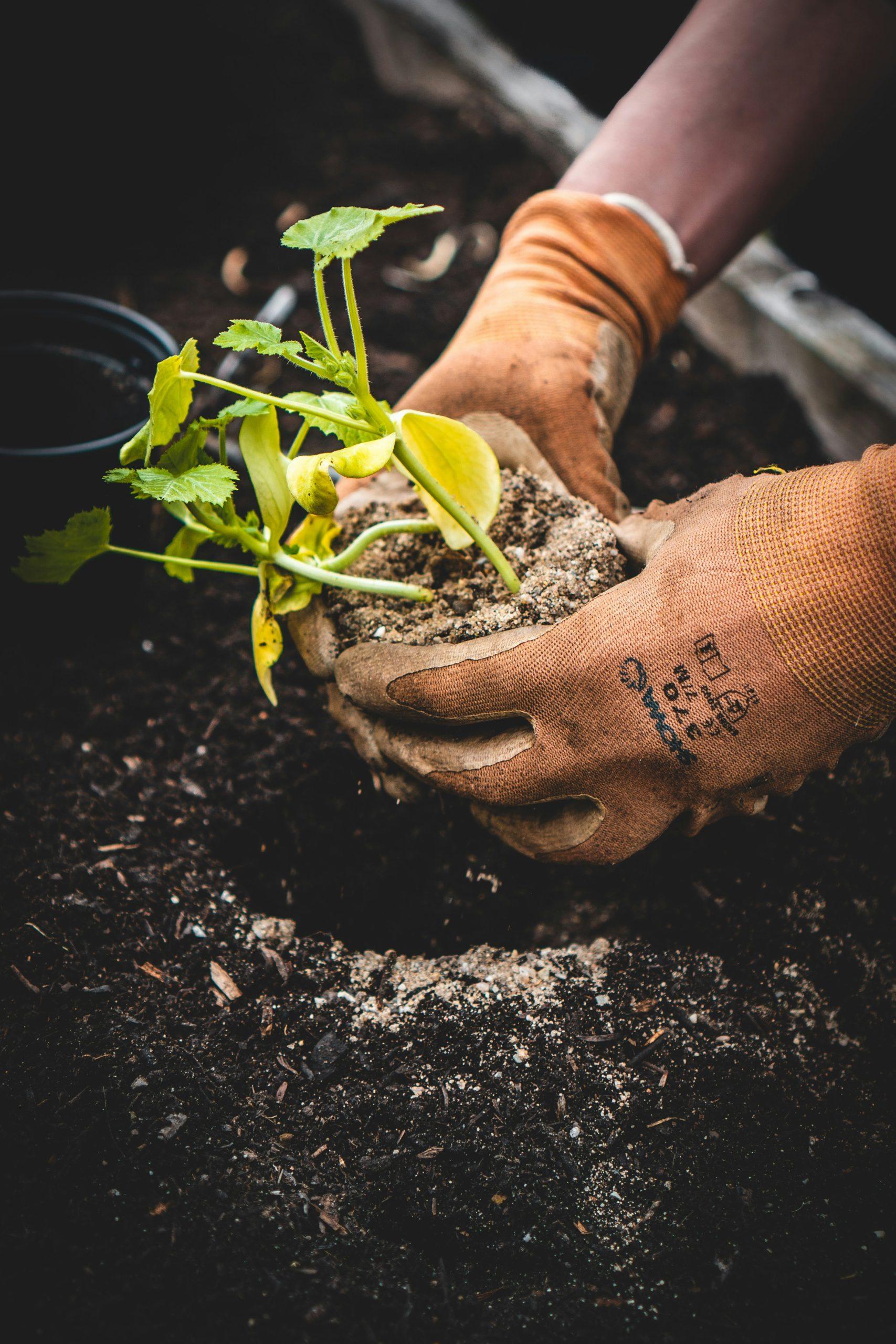
Featured image: Photo by Jonathan Kemper on Unsplash


