
I submitted my dissertation a day early. No late nights before the deadline, no last-minute rush, no panic. I used to pride myself on quoting Douglas Adams, with his deadlines making a whooshing sound as they fly by, but in the end I was relaxed and ahead of time. So uncool. My past self doesn’t even know me any more. I’m waiting for my grade; I averaged 75% across my other assessments, so I’m hoping for a distinction. Graduation is 12 December. I’ve hired my gown and silly hat. I’m feeling quite proud of myself. I only went and did a Master’s degree.
The dissertation covered a lot of ground. It felt like a greatest hits of my course and scratched a lot of itches. I looked at the binary view of food systems that pervades academia, policy and practice: food systems are seen as either monolithic industrial food or romanticised alternative food movements, with little room for the continuum of practice in between. So much happens between the poles that the debate doesn’t seem to see, and what isn’t represented doesn’t get built for. Policy and infrastructure don’t support scaling agroecology, multigenerational outcomes or genuine diversity of practice. ‘Hybrid’ practitioners, who engage with industrial systems while remaining rooted in an agroecological paradigm, often have to improvise with the infrastructure available or build their own alternatives, even when they work at scale. The binary constrains the spread of good practice because it treats any deviation from the poles as compromise, selling out or failure.
I pulled in a lot of literature, some of the history, my own experience from farming and research work outside study, and themes from three brilliant interviews with people working in the middle space. They form part of what Lori Stahlbrand calls “the infrastructure of the middle“, which needs more support and attention for food systems to be sustainable, fair, pluralistic and, to use the now massively overused word, resilient. I left several loose ends in the dissertation – recommendations for further research sounds slicker though, so I called them that. I’m looking at picking some of them up in a PhD. The critique is one thing; taking it out into the world and doing something about it might be the main point of the PhD. I’m quietly excited about the prospect of doing this, if it comes off.
I really enjoyed the degree, though I didn’t always find it easy (I knew I wouldn’t, which was one reason I did it). Problems with focus and prioritisation in my second term meant I had to ask for an extension and support from student welfare. I had to learn some research techniques. My second year was mostly a very solitary experience. I had to fight myself to focus. A lot. A PhD will be a different beast altogether, I know this. The write-up looms like a big, loomy thing.
Related to study: some, several, academic publishers are absolute shithouses. When you search for a paper or book chapter, it could be hosted by any one of a number of these publishers, most often as a PDF, but often also in some godawful proprietary format, like the execrable Kortext. I hadn’t realised that for-profit academic publishers make money hand over fist while paying the academics and reviewers who write their content nothing. We like to complain about AI companies stealing content; academic publishers have been shafting academics for years. A trend is now crowbarring in AI bots to provide summaries of article content (which you should, er, be reading yourself, shouldn’t you), and feeding research into LLMs as learning material, when students are punished for using the same AI systems to write their work. Microsoft has paid Taylor & Francis millions for access to data to feed into their AI, with authors neither approached for consent nor likely to see any share of the revenue.
I take it on good authority that if you want to read an article but it’s behind a publisher’s paywall, if you go directly to the author and ask nicely, they are more than likely to be delighted to share it with you (and if you pay for it, at least you’d be paying them directly.)
At the end of this year, Sharp’s brewery at Rock will be closed by its owners Molson Coors with the loss of 50 jobs. They’ve been brewing their bottled beers elsewhere for a while, at Burton-on-Trent and Tadcaster. Cornish beer isn’t very Cornish when it’s brewed over 400 miles away. A brewery disappears and becomes a brand portfolio. Shame, because I liked Atlantic, but if a beer just becomes intellectual property of a multinational and not of a place, brewed by the same people that produce so much other generic shouting water, what’s the point?
It reminds me of when Pete McCarthy wrote about being sat in a pub in Dingle getting all carried away with the romance of the place:
The perfect evening, in the perfect pub. The kind of evening that leaves you with a warm feeling. Especially when accompanied by seven pints of Guinness. Before I left, I asked where the fragrant local potatoes came from.
Pete McCarthy – McCarthy’s Bar: A Journey of Discovery in the West of Ireland
‘Egypt.’
So why do I feel like such a twat if I ask in a pub, “what’s local?”
This is your occasional reminder that you are under no obligation to wade through advert after advert online and in your streaming services and socials, and I’m still surprised by how few people seem to have found the tools that can help them block out constant advertising.
For a start, browse the web with Firefox with the uBlock Origin add-on installed and bask in the clutter-free, ad-free experience and better privacy from blocking trackers and annoyances. It is genuinely transformative, and it works on mobile as well.
I’ve been really impressed with TizenTube as an ad-free YouTube client for Google TV, and Morphe offers a range of patches to dis-enshittify apps from YouTube to Instagram.
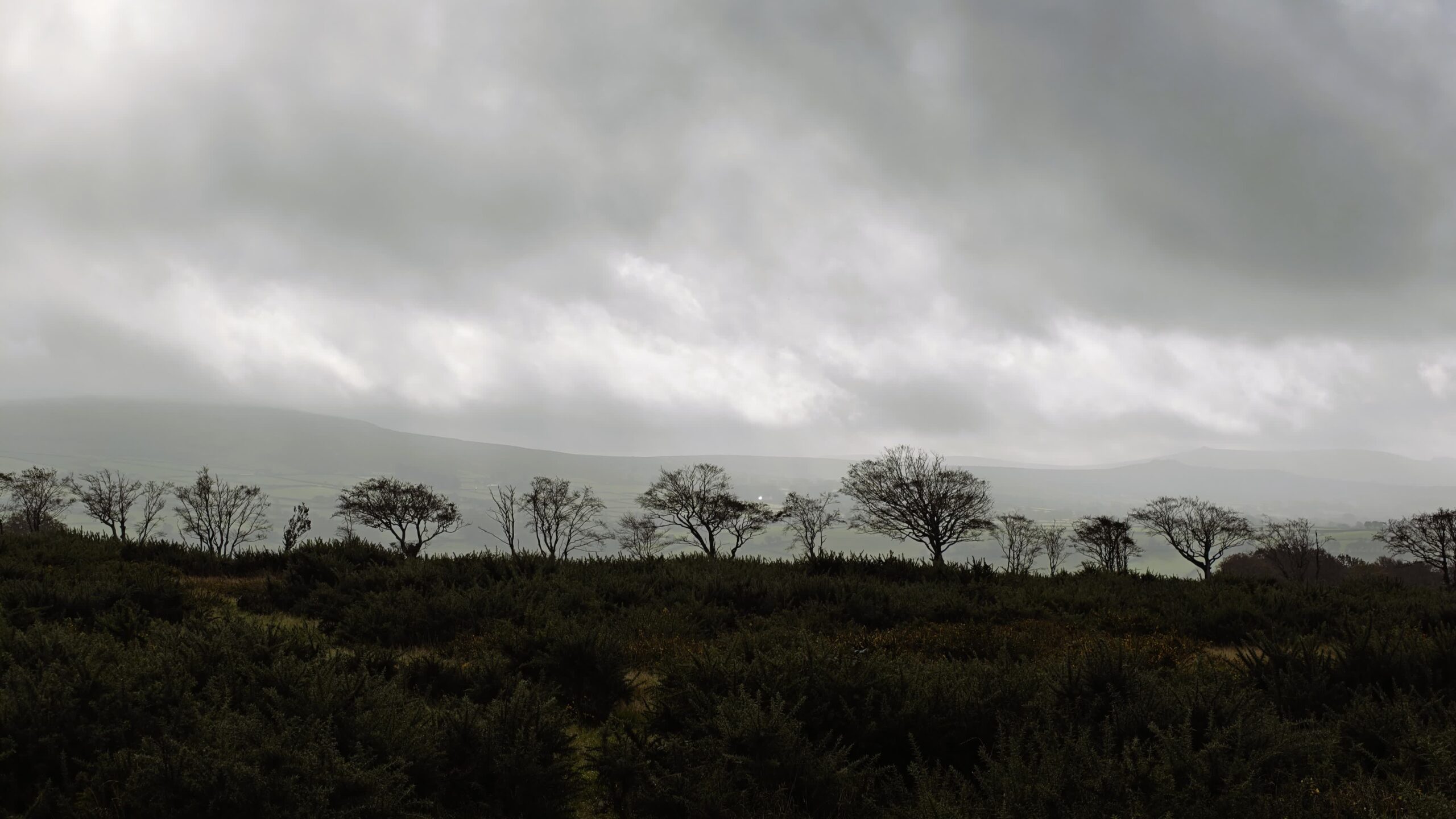
The featured image: view across Burnford Common to the high moor on Dartmoor.
I need to get garlic planted.


