
Over 180 organisations, academics, farmers and community food leaders have written an open letter to Prime Minister Andy Burnham voicing the concern that “the UK is complacent and unprepared for the food emergencies we know are coming”.
The letter demands a range of actions from the inclusion of food in the National Risk Register to a greater focus on food safety and security in policy and planning, more community food storage, household and community engagement in food security, and decentralisation of the UK’s food sector.
Risks to our food system are here and now, not in some future scenario. AHDB’s 2026 harvest report records wheat yields well below the five-year average following prolonged heat and drought. Many farmers are struggling to justify even sowing crops in continuing challenging conditions as soils are parched, fuel costs have almost doubled since the beginning of the Iran conflict, and supermarkets squeeze margins. Fridges in French supermarkets have recently been hit by hackers forcing some to warm to 50 degrees Celsius, resulting in food having to be thrown away. Tim Lang, Paul Behrens and other signatories to the letter have been warning for some time about food security, including in Lang’s report for the National Preparedness Commission and Behren’s recent contribution to the National Emergency Briefing.
The vulnerabilities in our food system are not new. They are a symptom of ever-greater centralisation and financialisation. Environmental damage and pollution, poor animal welfare, greenhouse gas emissions, obesity and diet-related disease are well-known problems. Our food system is overwhelmingly controlled by a few large businesses with little transparency, and it depends on single points of failure, such as the handful of major distribution hubs that serve the UK’s supermarkets. Intensifying environmental and geopolitical crises are amplifying these weaknesses to the point where fragile systems could fail. Food security may be high on the agenda now, but food and fuel insecurity are already a daily fact of life for many in the UK with 9% of the population of the UK in food insecurity. The food system is already failing many.
The letter says that our food security must be championed, not ducked. But during one of the last major supply chain shocks, the COVID-19 pandemic of 2020, Centre for Food Policy research found that food policy in England was made by 16 different government departments. When I asked an MP about this fragmentation earlier this year, they appeared to acknowledge that little had changed.
There are so many reasons to hope, though. Earlier this week I went to the Sustainable Food Cornwall Summit and heard inspirational people like Stuart Oates talking about fossil-free farming, Cornwall Council Director of Public Health Eunan O’Neill with a holistic view of public health, and Camborne Science & International Academy Principal Emma Haase on how they have taken control of their catering, bringing it in-house to provide tasty, nutritious meals for students. Stories like this are playing out across the country, with progressive farmers, businesses and organisations finding creative ways to build a better food system.
Resilience is baked into so many of these solutions: from good education and health outcomes to a lighter environmental footprint, shorter and decentralised food chains, more use of biology over chemistry and reduced dependence on fossil fuels. As Lt General Richard Nugee said in a recent episode of the Farm Gate Podcast, resilience goes beyond bouncing back from a shock. It also acts as a deterrent, making attack less likely in the first place. Even without military action or supply chain disruption, resilience means continuing to feed ourselves despite challenges ranging from biodiversity collapse to changing weather patterns, floods, droughts, and new disease and pest burdens.
Yet my own work in farming and research including my Master’s dissertation research suggests that there are numerous barriers to scaling good food and building food resilience and security in the UK. Infrastructure, from water storage to grain processing, is patchy and often designed to work only for commercial throughputs. A binary view of food systems in academia and debate has obscured the huge potential of hybridity and pluralism. Confusion over language, scale and positioning means we might be pushing for the wrong solutions in the wrong places. Incentives for nature-friendly land management are disconnected from food production, often lacking transparency or rigour, leading to schemes that don’t directly reward good farming or value good food.
That is why the open letter from Foodrise and others to Andy Burnham matters. The government needs to provide leadership and a strategy that looks systemically at what food security and resilience mean for the UK. The solutions reach far beyond the supermarkets, which sell 95% of the food we eat, but they must still include them.
Beyond a simple view of food security, there is a genuinely exciting possibility. Food is a national security issue, yes. But it is so much more than that. It is fundamental to our lives, our bodies, our society, our culture, our health. So much of what we need to do to adapt to climate change, address biodiversity loss, build strong and healthy communities, and live better alongside nature, is down to how we eat. The crises we face could be the catalyst for fixing our food system, and fixing it would fix a great deal else. Resilience, ultimately, is how we might thrive.
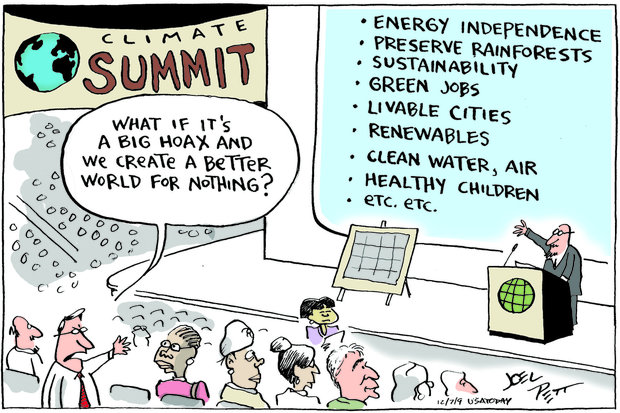
As I was writing this, I thought about the now well-known cartoon by Joel Pett listing all the good outcomes of addressing climate change. The list looks almost exactly what a good food system would deliver. Even if the worst outcomes we fear never come to pass, it’s still worth working towards that.


Australian Govt has been working on a food security strategy – no one should be food insecure here but many are! http://www.agriculture.gov.au/agriculture-…